

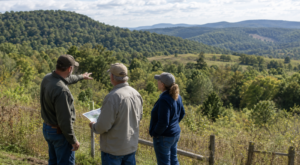
Managing a large piece of land in Berkeley Springs, West Virginia is very different from mowing a small residential yard. Large acreage can include wooded slopes, old fields, brushy fence lines, invasive plants, access roads, drainage areas, wildlife habitat, and areas near neighboring properties. For landowners, vegetation management is not only about appearance. It can affect safety, property value, land usability, fire risk, erosion control, and long-term stewardship.
Because Berkeley Springs is located in Morgan County and surrounded by rural, wooded, and mountain terrain, landowners often deal with fast-growing brush, unwanted saplings, vines, deadfall, invasive plants, and overgrown areas that become difficult to access. The legal side matters because land clearing, burning, timber removal, stormwater runoff, and boundary-line work can create problems when handled without planning.
This article explains how West Virginia law connects to responsible vegetation management for larger properties. It is not legal advice, but it gives landowners a practical overview of why the rules matter before clearing, cutting, burning, or reclaiming overgrown acreage. 🌿
Why Large Acreage Vegetation Management Matters in Berkeley Springs WV
Berkeley Springs, officially known as Bath, is a historic town in Morgan County, West Virginia, and the surrounding area includes rural acreage, wooded properties, farms, recreational land, and mountain homes. According to Wikipedia’s page on Berkeley Springs, West Virginia, the town is located in the eastern panhandle of West Virginia and serves as the county seat of Morgan County.
That local setting matters. Landowners in and around Berkeley Springs often own property that is not flat, simple, or easy to maintain. Vegetation can grow across steep banks, creek edges, access trails, unused fields, forest borders, and old home sites. When large acreage becomes overgrown, it can invite pests, reduce visibility, block access, create wildfire concerns, and make the property harder to use or sell.
Professional Large Acreage Vegetation Management Berkeley Springs WV can help landowners reclaim usable space while protecting the long-term condition of the property. The legal angle is important because vegetation work can overlap with environmental protection, timber rights, fire laws, noxious weed control, and local safety rules.
West Virginia Law Connects Land Use with Responsibility
West Virginia law recognizes that private land use and environmental protection often overlap. The West Virginia Code includes laws covering property, agriculture, forestry, environmental protection, criminal damage to trees and plants, and land-use planning. For large acreage owners, this means vegetation management should be treated as a property improvement project, not just a cleanup job.
A landowner may have every intention of improving a property, but careless clearing can create legal exposure. Removing the wrong trees, pushing debris into a drainage area, burning land-clearing waste without proper approval, damaging vegetation on a neighboring parcel, or disturbing soil on a large scale can all create issues.
Good vegetation management starts with knowing what is being cleared, where the property lines are, how debris will be handled, and whether the work could affect waterways, slopes, roads, or nearby properties. Responsible clearing protects the owner while also protecting the surrounding land.
Environmental Protection and Land Disturbance Rules
One of the most important legal concerns for larger acreage projects is land disturbance. Vegetation management does not always trigger the same rules as construction, but clearing land can become legally significant when it disturbs soil, changes runoff, or prepares a site for development.
The West Virginia Department of Environmental Protection construction stormwater program states that construction sites disturbing one acre or more generally require authorization under a WV/NPDES Construction Stormwater General Permit. This is especially relevant when vegetation clearing is connected to development, grading, road building, site preparation, or other activities that expose soil and affect runoff.
For Berkeley Springs landowners, this means a large clearing project should be planned carefully. Clearing brush is one thing. Clearing, grading, and changing drainage patterns across a large area is something else. Once soil is exposed, rain can move sediment downhill into ditches, streams, neighboring properties, or public roads.
This is why good vegetation management often includes selective clearing instead of unnecessary stripping of the land. Keeping desirable trees, maintaining buffer areas, controlling erosion, and planning access routes can reduce risk while still making the property more usable.
West Virginia’s Environmental Policy Supports Responsible Stewardship
The state’s broader environmental policy also matters. West Virginia Code §22-1-1 states that restoring and protecting the environment is fundamental to the health and welfare of citizens. It also explains that the state has responsibility for protecting the environment and that natural resource decisions should balance public welfare, environmental protection, and economic development.
For a landowner, this does not mean every brush removal project is a legal problem. It means large-scale vegetation work should be done with care. West Virginia values private property rights, but those rights exist alongside responsibilities involving water, soil, timber, wildlife, and neighboring land.
In practical terms, responsible vegetation management should consider how the land will function after the work is complete. A clean field that erodes after the first hard rain is not a successful project. A cleared access road that sends runoff onto a neighbor’s property can create conflict. Removing every tree from a slope can increase maintenance problems. A better approach is to improve the land while preserving stability.
Tree Cutting, Boundary Lines, and Neighboring Property
Large acreage properties often have wooded borders, old fence lines, unclear corners, or shared access areas. This makes boundary awareness one of the most important parts of vegetation management.
West Virginia law takes unauthorized cutting seriously. West Virginia Code §61-3-48a addresses cutting, damaging, or carrying away timber, trees, growing plants, or plant products from another person’s land without written permission. The law provides that a person who enters another’s land without written permission for that purpose can be liable for three times the value of the timber, trees, growing plants, or products.
For landowners, the lesson is simple. Know the property boundaries before cutting, clearing, or hiring someone to clear. On large tracts, assumptions can be expensive. Old fence lines may not match surveyed boundaries. Wooded areas can make corners hard to see. A contractor working quickly with heavy equipment may cross a line without meaning to.
Before beginning vegetation management near a border, landowners should review surveys, mark boundaries, communicate clearly with contractors, and avoid cutting trees or brush in disputed areas. This protects the landowner, the contractor, and the neighboring property owner.
Noxious Weeds and Invasive Plant Concerns
Vegetation management is not only about removing what looks messy. Some plants are legally and environmentally significant because they spread aggressively, damage agriculture, harm desirable plants, or affect waterways.
The West Virginia Noxious Weed Act defines a noxious weed as a plant declared by the commissioner to be detrimental to crops, other desirable plants, waterways, livestock, land, property, public health, or the economy. That definition is important because invasive and noxious plants can turn a manageable property into a long-term maintenance problem.
The West Virginia Department of Agriculture has also reported on invasive plant rules, including the state’s action against Japanese barberry. A West Virginia Department of Agriculture news release noted that the sale or distribution of Japanese barberry became illegal in West Virginia starting July 1, 2020, after it was added to the noxious weeds list.
For large acreage landowners, this matters because clearing the wrong way can spread invasive plants instead of controlling them. Cutting, mowing, or disturbing certain species at the wrong time can scatter seeds or root fragments. Professional vegetation management should identify problem plants, choose the right removal method, and reduce regrowth where possible.
Burning Brush and Land-Clearing Debris
Many landowners assume that brush piles can simply be burned after clearing. In West Virginia, controlled burning is subject to rules, and local procedures matter.
Morgan County provides guidance for controlled burns through its Controlled Burns page. The county notes that controlled burns should be reported by phone, that questions can be directed to the West Virginia Division of Forestry, and that open burning of land-clearing debris must be approved by the WV Forestry Department. The county also explains that only natural vegetation may be burned and that fires must be attended at all times.
This is a major issue for large acreage vegetation management because clearing can produce a lot of debris. Brush, vines, saplings, limbs, and dead vegetation can pile up quickly. Poor debris handling can create fire hazards, smoke problems, complaints, and legal consequences.
A responsible vegetation management plan should decide in advance how material will be handled. Options may include mulching, chipping, hauling, controlled burn approval, selective disposal, or leaving some material in appropriate habitat areas. Burning should never be treated as an automatic solution.
Forestry Guidance and Long-Term Land Health
Some large acreage projects involve wooded land rather than open fields. In those cases, vegetation management may overlap with forestry, wildlife habitat improvement, timber stand improvement, and access planning.
The West Virginia Division of Forestry landowner assistance program provides resources for woodland owners, including guidance through programs such as Call Before You Cut, professional foresters, and management assistance. The Division of Forestry explains that these resources help landowners manage woodlands for multiple uses, including wildlife, recreation, timber, and woodland streams.
This is helpful for Berkeley Springs landowners who want more than a quick clearing job. A wooded property can often be improved without wiping it clean. Selective removal of invasive growth, thinning undesirable saplings, opening trails, clearing around structures, improving sightlines, and protecting valuable trees can all make land more usable while preserving its natural character.
Long-term land health also supports property value. A well-managed property looks intentional. It gives future buyers, heirs, tenants, or users a clearer picture of how the land can function. Overgrown acreage can feel neglected, but managed acreage feels usable, safer, and more valuable.
Legal Awareness Helps Prevent Expensive Mistakes
The biggest legal problems often happen when landowners treat large acreage vegetation management as a simple weekend project. The scale changes everything. A small mistake on a quarter-acre yard may be easy to fix. A mistake across ten, twenty, fifty, or one hundred acres can be expensive.
Common risks include crossing property lines, removing valuable trees without proper authority, creating drainage problems, spreading invasive plants, burning debris improperly, disturbing soil near waterways, failing to stabilize cleared areas, and hiring uninsured or unqualified operators. These problems can lead to neighbor disputes, government complaints, fines, liability, or expensive corrective work.
The better approach is to plan first. A landowner should identify the goal of the project, determine which areas need clearing, protect property boundaries, avoid unnecessary soil disturbance, follow burn rules, consider erosion control, and use experienced professionals when the job is too large or too risky for basic equipment.
Conclusion
Large acreage vegetation management in Berkeley Springs WV is about more than cutting brush. It is about restoring access, improving safety, protecting land value, controlling invasive growth, reducing fire hazards, and keeping the property usable for the future. West Virginia law matters because large-scale clearing can affect environmental protection, stormwater runoff, timber rights, boundary lines, noxious weeds, and controlled burning.
For Berkeley Springs and Morgan County landowners, the smartest path is responsible planning. Know the land. Know the boundaries. Know how debris will be handled. Know whether the work could disturb soil or affect drainage. Know when forestry guidance, local approval, or professional help is needed.
Well-managed acreage can become a stronger, safer, and more valuable asset. Poorly planned clearing can create legal, financial, and environmental problems that last long after the equipment leaves. By understanding how West Virginia law connects to vegetation management, landowners can make better decisions and protect both their property and the land around it.