


The Legal Landscape of Automotive Consulting Services 🚗⚖️

Law News for Automotive Consulting Services

Automotive consulting sits at the intersection of engineering, retail, finance, safety, and data. That makes it a magnet for complex legal obligations. Whether advising dealerships, repair networks, insurers, fleet operators, EV startups, or Tier 1 suppliers, automotive consultants work inside a web of statutes, regulations, and common-law duties that shape every engagement. Understanding this framework protects clients, strengthens deliverables, and reduces risk across the lifecycle of a consulting project.

What Counts as Automotive Consulting—And Why the Law Cares

Automotive consulting is broad. It can include strategic planning for dealer groups, compliance audits for recall workflows, warranty program design, market entry for EV infrastructure, cost reduction and sourcing guidance for manufacturers, shop process optimization, ADAS and autonomy readiness assessments, and data analytics for telematics and claims. The law pays attention because these projects touch consumer protection, product safety, environmental compliance, advertising standards, competition policy, data privacy, labor, and intellectual property. Each area carries specific duties that consultants must recognize and address in statements of work, deliverables, and client training.

Entity Setup, Scope, and the Contractual Backbone

Before an engagement begins, the contract is the risk engine. Well-crafted master service agreements and statements of work should define the scope, reliance on client-supplied information, change-order procedures, acceptance criteria, and deliverable ownership. Key provisions typically include:

  • Indemnification allocations tied to each party’s control over outcomes

  • Caps and carve-outs for liability, excluding willful misconduct or IP infringement

  • Professional services warranties limited to industry standards and reasonable skill and care

  • Clear lines on subcontractors, independence, and conflicts of interest

  • Records retention rules aligned with client compliance files

Consultants operating through LLCs or corporations with proper insurance—commercial general liability, professional liability (E&O), and cyber liability—create further protection and signal maturity to risk-sensitive clients.

Advertising, Sales Practices, and Consumer Protection

Automotive commerce remains one of the most scrutinized consumer markets. Consultants who advise on sales funnels, F&I menus, digital retailing, or service-lane upsells must apply unfair and deceptive acts or practices principles to every script, page, and workflow. Pricing transparency, substantiation for claims, and plain-language disclosures are not merely best practices; they are regulatory expectations. Consultants should build compliance by design into deliverables—templates that automatically include required pricing elements, disclaimers that are conspicuous and proximate, and training modules that align with dealer and service-department reality.

Safety, Recalls, and Quality Systems

Where projects involve vehicle components, ADAS calibrations, or repair procedures, safety rules and recall obligations loom large. Consultants supporting manufacturers, distributors, or collision networks need to map process improvements to safety reporting frameworks, incident escalation paths, and corrective action timelines. Advising on calibration or repair workflows without validating against technical bulletins, torque specs, and OEM requirements invites legal exposure. Documentation—who did what, when, using which specification—is decisive in audits and dispute resolution. Consultants should recommend auditable checklists, event logs, and training sign-offs to show a culture of safety.

Environmental and Energy Compliance for EV and ICE

EV transitions and legacy internal combustion compliance create overlapping legal demands. Battery logistics consulting implicates hazardous materials handling, storage, and shipping rules. Facility planning for charging networks touches permitting, electrical standards, accessibility, and sometimes utility tariffs. For ICE operations, waste oil handling, emissions testing processes, and shop air quality controls matter. Consultants should deliver matrices that link each operational recommendation to the governing environmental standard and provide a cadence for internal audits.

Right to Repair, Data Access, and Telematics

The right to repair movement affects parts availability, diagnostic access, and telematics data control. Consultants advising independent shops or multi-brand fleets must consider how access rules and data-sharing agreements shape feasibility. For OEM-aligned operations, the same topic impacts how to structure protected data portals, API governance, and fair-use constraints. When recommending data flows—for example, to optimize maintenance intervals—consultants should prescribe role-based access, data minimization, encryption in transit and at rest, retention limits, and incident response plans. Reference frameworks borrowed from security standards help clients pass audits and reassure partners.

A helpful background explainer on the policy arc here is the Wikipedia overview of right-to-repair, which charts the evolution and debates that inform many current business decisions in automotive service and data governance: Right to Repair.

Privacy, Cybersecurity, and Connected Vehicle Governance

Telematics and connected services convert vehicles into data sources. That data can include trip history, driver behavior, biometrics, and even cabin audio in some contexts. Consultants who design analytics initiatives must embed privacy-by-design principles: specify the lawful basis for processing, define purpose limitations, minimize fields, and document retention schedules. Where projects cross borders, choice-of-law and data localization concerns surface. For dealerships and repair networks, customer portals and Wi-Fi networks require baseline cyber hygiene: MFA, least-privilege access, vendor-risk reviews, and encryption. Deliverables should include both policy blueprints and technical hardening checklists tied to the business objectives.

Competition, Market Strategy, and Vendor Selection

Procurement and pricing recommendations can raise antitrust concerns if they reduce competition, enable collusion, or produce vertical restraints without proper justification. Consultants must avoid sharing competitively sensitive information among horizontal competitors and should implement clean-room practices during benchmarking. Where exclusive dealing, MAP policies, or selective distribution are part of a strategy, legal review ensures the approach is pro-competitive and evidence-based. Training teams on what can and cannot be discussed in joint working sessions keeps collaboration productive and lawful.

Warranties, Service Bulletins, and UCC Considerations

Automotive engagements often traverse implied warranties, express warranties, and service bulletin compliance. When consultants develop maintenance plans or recommend parts substitutions, they should analyze whether the plan could be construed as a warranty representation or a deviation from OEM guidance. In B2B settings governed by the Uniform Commercial Code, disclaimers and limitation-of-remedies clauses must be conspicuous and tailored. Consultants can help clients align customer-facing materials with their legal posture, lowering the chance of warranty disputes.

Employment, Safety Culture, and Independent Contractors

Operational change touches people. Recommendations about pay plans, technician classification, flat-rate hours, and shop safety training implicate wage-and-hour laws and workplace safety rules. Consultants should flag when a proposed incentive structure might discourage required safety checks or encourage off-the-clock work. If a client relies on independent contractors for mobile services, the tests for contractor classification must be respected. A compliance-first culture wins long-term productivity and reduces the cost of churn, claims, and enforcement actions.

Intellectual Property, Know-How, and Confidentiality

Consultants generate methods, frameworks, code, and data models. Clients contribute proprietary service procedures, parts data, pricing formulas, and customer lists. Engagements should define who owns what. A pragmatic split often gives the client ownership in bespoke deliverables while the consultant retains pre-existing tools and generalized know-how. NDAs and trade-secret hygiene protect both sides. If open-source software appears in analytics stacks or shop tools, license compliance needs a simple register and a maintenance plan.

Professional Responsibility and the Duty of Care

Even when not licensed as lawyers or engineers, automotive consultants owe a professional duty of care consistent with industry standards. That duty grows with specialized work like ADAS calibrations guidance, collision repair methods, or safety-critical process design. Consultants should use peer review, maintain version control on technical recommendations, record assumptions and limitations, and avoid scope creep that silently edges into regulated professional practice. When legal interpretation is required, the engagement should expressly require counsel review before implementation.

Governance Artifacts Clients Expect

To translate law into repeatable operations, consultants should deliver a focused governance package:

  • A compliance matrix mapping each recommendation to the governing rule or standard

  • Policy templates with clear owners, effective dates, and revision trails

  • A training curriculum with role-based modules and assessment checkpoints

  • An audit schedule and sampling approach that fits the client’s risk profile

  • An incident response plan covering safety, data, and customer communication

  • A vendor-risk rubric for software, parts, and outsourced services

These artifacts keep programs resilient when staff turns over and regulations evolve.

Staying Current With Trusted Law News Sources

Automotive rules shift as technology and consumer expectations change. Building a habit of ongoing horizon scanning keeps programs aligned. Useful, credible sources include the legal press and analysis hubs that track regulatory moves, enforcement trends, and landmark decisions affecting mobility, data, and consumer protection:

These outlets surface developments that ripple directly into dealership compliance, supplier contracts, telematics governance, and safety obligations, enabling consultants to refresh playbooks and training before issues become exposures.

Execution Discipline and Measurable Compliance

Law-aligned consulting produces measurable outcomes. Tie every recommendation to a metric: disclosure completion rates on digital retail pages, cycle time for recall part triage, calibration pass rates after ADAS repairs, audit pass rates on hazardous materials handling, percentage of staff with current certifications, and mean time to revoke access after role changes. Dashboards reveal whether governance exists only on paper or truly hums on the shop floor, in the lane, and across the procurement and analytics stacks.

Conclusion

Automotive Consulting Services thrives when the law is not an afterthought but a design constraint that sharpens decisions. Contracts define responsibilities, safety frameworks turn procedures into habits, privacy and cybersecurity protect trust, competition principles keep markets fair, and employment and IP rules respect the people and ideas that power results. With disciplined governance artifacts, thoughtful training, and steady attention to reputable law news, consultants deliver improvements that last, withstand audits, and scale. The outcome is durable value for clients and a safer, more transparent experience for the drivers, passengers, and communities they serve.
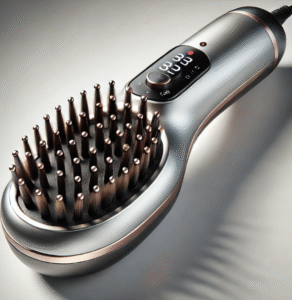
Heat, Safety & Compliance: The Laws Behind Manufacturing a Thermal Hair Brush 🔌🔥

Law News for Thermal Hair Brush

Thermal hair brushes—whether they’re heated smoothing brushes or “dryer brushes” that combine airflow with a round brush—sit at the intersection of beauty, electronics, and consumer-product law. If you’re planning, sourcing, or private-labeling one, understanding the legal landscape isn’t optional; it’s the difference between a product that ships and a product that gets recalled. This guide walks through the key U.S. and EU rules, how they apply differently to straightening brushes vs. dryer brushes, chemical and environmental obligations, and the documentation you’ll need to show if a regulator knocks on your door. ✍️

What counts as a “thermal hair brush,” legally speaking?

In regulatory terms, there are two broad categories you’ll see in the market:

  1. Heated straightening/smoothing brushes (no blower): These are electric grooming appliances that heat and smooth/straighten hair. In the EU, they’re typically evaluated under EN/IEC 60335-1 (base safety) plus EN/IEC 60335-2-23 (appliances for skin or hair care), within the Low Voltage Directive framework. In the U.S., safety compliance generally maps to UL standards for electric personal grooming appliances (UL 859 and related), along with general consumer-product safety duties. (See EU overviews and EN 60335 series references. ProductIPedia+1)

  2. Hair dryer brushes (blower + brush head): In the U.S., anything that meets the definition of a “hand-supported hair dryer” triggers a specific, legally enforceable safety requirement: integral immersion protection in the plug (often an ALCI/GFCI-type device). Products lacking this are deemed a “substantial product hazard” and are recall-eligible. Multiple recent warnings and recalls underscore this point. Federal Register+2U.S. Consumer Product Safety Commission+2

Understanding which bucket your product falls into is step one—because the legal obligations are not identical.

The U.S. framework: CPSC rules, recalls, and practical obligations

1) CPSC immersion-protection rule for hand-supported hair dryers.
Since July 28, 2011, any hand-supported hair dryer imported or sold in the U.S. without integral immersion protection (per UL 859/UL 1727) is a substantial product hazard. Many “dryer brushes” qualify as hair dryers, so this requirement often applies to the brush/dryer hybrids. If your product lacks the protection device in the plug, it’s at risk for immediate enforcement and recall. Federal Register

Recent enforcement illustrates the point. In 2025, the CPSC issued public warnings telling consumers to stop using certain hair dryer brushes that lacked immersion protection and cited them as violating federal regulations. A separate Remington hair dryer recall involved more than 56,000 units for the same hazard. These actions show how closely the agency is monitoring this category. U.S. Consumer Product Safety Commission+1

2) General consumer-product safety obligations.
Even if your brush is the heated-only type (no airflow), you still owe baseline duties: ensuring electrical safety, fire/shock protection, proper labeling, traceability, and incident reporting if you learn of a substantial risk. Voluntary standards (e.g., UL 859) are often used to demonstrate due care. Notably, immersion-protection requirements have been empirically tied to dramatic reductions in electrocution risk—another reason to evaluate protective measures even where not strictly mandated. PubMed

3) Cosmetics vs. devices: where does FDA fit?
A thermal hair brush is not a cosmetic (cosmetics are products applied to the body), and it’s not a medical device unless you’re making therapeutic claims. Still, if you bundle the brush with a cosmetic (e.g., a heat-activated serum), remember that cosmetics do not receive FDA premarket approval (except color additives) but must comply with labeling and safety requirements under U.S. law. U.S. Food and Drug Administration

4) Chemicals and warnings (California).
Cords, plastics, flame retardants, and solders can implicate California Proposition 65. If your product exposes users to listed chemicals at significant levels, you’ll need a “clear and reasonable” warning, and as of 2025 updates, short-form warnings generally must name at least one listed chemical. Manufacturers selling nationwide often apply Prop 65 warnings for California sales to reduce legal risk. National Law Review+1

The EU/UK framework: CE/UKCA, LVD, RoHS, and market surveillance

1) Electrical safety under the Low Voltage Directive (LVD).
In the EU, thermal hair brushes fall under LVD and must meet EN/IEC 60335-1 plus the applicable -2 part—EN/IEC 60335-2-23 for hair/skin-care appliances. Compliance is typically demonstrated via third-party testing, a technical file, a Declaration of Conformity, and appropriate CE marking (UKCA in Great Britain). EU Safety Gate alerts show that noncompliant hair-care appliances are removed from the market for failing these requirements. ProductIPedia+2D.L.S. Electronic Systems, Inc.+2

2) Substances restrictions (RoHS) and environmental compliance.
Because a thermal hair brush is electrical/electronic equipment, it must satisfy RoHS (limits on lead, mercury, cadmium, certain flame retardants, etc.) and, where applicable, WEEE obligations (producer registration, take-back, and marking). RoHS noncompliance remains common; don’t gloss over material declarations and test reports. Environment+1

3) Chemical safety (REACH/Prop 65 vs. EU).
While California’s Prop 65 is a U.S. state warning regime, the EU’s REACH system addresses chemicals through restrictions, authorization, and communication duties (e.g., SVHC communication in articles). If your brush uses plasticizers or flame retardants that are restricted or listed, procurement and documentation must reflect that. (See RoHS/chemical compliance primers and official summaries.) HQTS

Distinguishing heated brushes from dryer brushes: why it matters

From a legal perspective, the presence of airflow can push your product into the “hand-supported hair dryer” category in the U.S., which then mandates immersion protection. If your thermal brush blows air, assume you need a plug-integrated protective device that passes the applicable UL requirements. If it’s heat-only, you still need robust electrical safety, thermal cutoffs, enclosure/material safety, and reliable temperature control to avoid burns or fires—but the specific hair-dryer immersion rule may not apply. When in doubt, test both ways and document your reasoning. Regulators frequently cite noncompliant dryer brushes in warnings and recalls—an avoidable pitfall with correct design and qualified plugs. Federal Register+1

Labeling, documentation, and traceability: what buyers and regulators expect

  • Technical file / test reports. Keep current UL/IEC reports, risk assessments, circuit diagrams, material declarations (RoHS), and thermal testing.

  • Declarations. Maintain EU DoC (and UK DoC where applicable) and keep copies with importers/distributors.

  • Markings. CE/UKCA marks (where required), electrical ratings, warnings, and any necessary Prop 65 statements for California.

  • Traceability. Use tracking labels (lot/date codes) to enable targeted corrective action.

  • Surveillance readiness. EU market authorities and the CPSC routinely review high-risk appliance categories; recent U.S. actions against non-immersion-protected dryer brushes are a reminder that documentation is only half the job—the plug hardware must match the paperwork. U.S. Consumer Product Safety Commission

Platform distribution and evolving enforcement

If you sell through large marketplaces, note the evolving liability landscape. The CPSC has pressed platforms to take responsibility for recalls of unsafe third-party goods, a trend closely watched by legal reporters and in recent commission decisions. This matters because platforms can delist or block shipment fast if your brush runs afoul of safety rules. For ongoing legal developments, see Law360’s coverage of CPSC authority over platform recalls and Reuters Legal’s reporting on CPSC governance and enforcement climate. Law360: CPSC & Amazon Recall Powers ; Reuters Legal: CPSC Leadership/Enforcement Context. Law360+1

Chemicals, cords, and consumer warnings: the Prop 65 angle

Even compliant electronics can trigger Prop 65 duties based on listed chemicals in plastics, cord jackets, or flame-retardant systems. California’s 2025 updates tighten short-form labeling by requiring at least one chemical name per hazard endpoint in the warning. If you sell nationally, set up your packaging artwork to toggle California warnings and make sure your supplier declarations and lab reports identify potential listed chemicals early. For rule change details and practical impact assessments, see The National Law Review’s coverage. National Law Review: Prop 65 Short-Form Changes. National Law Review

(For official Prop 65 lists and business FAQs, the OEHHA site provides primary references.) OEHHA+1

Real-world lessons from recalls and warnings

  • Immersion protection isn’t optional for dryer brushes. Multiple 2025 warnings and recalls targeted hair dryer brushes lacking the protective plug device, with instructions for consumers to stop use and seek a remedy. If your design combines airflow with a brush head, budget the plug hardware and certification from day one. U.S. Consumer Product Safety Commission+1

  • EU market surveillance is active. Noncompliant hair-care appliances are flagged via Safety Gate, often citing failures against EN 60335-2-23 and the Low Voltage Directive. European Commission

  • Material compliance is still a trap. Enforcement studies and third-party labs report persistent RoHS failures in small appliances; do not rely solely on vendor certificates—verify with accredited testing and supply-chain controls. Intertek

Practical compliance checklist for a thermal hair brush manufacturer âś…

  1. Classify your product correctly. Airflow + brush = likely “hand-supported hair dryer” in the U.S. → immersion protection required. Heat-only brush = evaluate under grooming-appliance standards, but still manage shock, fire, and burn risks. Federal Register

  2. Design for safety. Integrate protective devices (ALCI/GFCI-type), thermal fuses/thermostats, and robust insulation; validate with UL/IEC testing.

  3. Document everything. Technical file, DoC/UK DoC, RoHS material declarations, risk assessments, and traceability labels. Environment

  4. Plan for Prop 65. Screen materials early; if warnings are needed for California, update artwork to reflect short-form chemical-name requirements. National Law Review

  5. Vet your supply chain. Require accredited lab reports for each critical component (plug, cord, heating elements, PCB, plastics).

  6. Monitor enforcement. Subscribe to CPSC and EU Safety Gate alerts; update designs if standards or interpretations shift. U.S. Consumer Product Safety Commission+1

  7. Plan marketplace compliance. If selling on platforms, expect documentation audits and swift takedowns for safety gaps; track evolving case law and agency stances via reputable law news outlets. Law360 ; Reuters Legal ; National Law Review. Law360+2Reuters+2

Law News đź“°

(Each used once, as requested.)

Conclusion: Compliance is a product feature—design it in from day one 💡

The law doesn’t treat every thermal hair brush the same. If you’re building a Thermal Hair Brush, immersion protection in the plug is a legal must-have in the U.S.—and regulators are actively enforcing it. If you’re producing a heated-only brush, you still have to meet rigorous electrical-safety, chemical, and environmental rules (UL/IEC, RoHS, Prop 65, and more). Across both categories, your best defense is a proactive compliance program: classify the product correctly, design with protection devices, verify with accredited tests, maintain airtight documentation, and track evolving enforcement and law-news updates. Done right, compliance becomes part of your value proposition—protecting users, enabling global market access, and keeping your brand off the recall list. Environment+3Federal Register+3U.S. Consumer Product Safety Commission+3


Key sources and official references used in this guide:
CPSC rule and guidance for hand-supported hair dryers; recent CPSC warnings/recalls for dryer brushes; EU LVD/EN 60335 references and Safety Gate alerts; RoHS official objective summary; FDA authority overview for cosmetics; National Law Review updates on Prop 65 short-form changes. National Law Review+9Federal Register+9U.S. Consumer Product Safety Commission+9