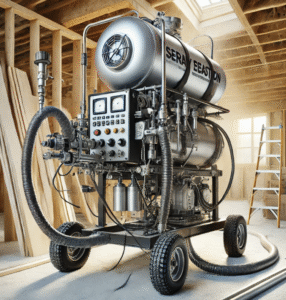
Spray insulation, particularly spray polyurethane foam (SPF), has become a cornerstone in modern construction due to its superior insulating properties. As demand for energy-efficient buildings grows, so does the need for reliable spray insulation machines. However, manufacturing these machines isn’t just about engineering prowess; it involves navigating a complex web of regulations to ensure safety, environmental compliance, and market viability.
This article delves into the legal requirements and best practices for manufacturing spray insulation machines in the United States, covering occupational safety, environmental regulations, equipment standards, and more.
Understanding Spray Insulation Machines
Spray insulation machines are designed to mix and apply SPF by combining two chemical components—commonly referred to as “A” (isocyanate) and “B” (polyol resin) sides. These machines must maintain precise temperature, pressure, and mixing ratios to ensure proper application and performance. Given the chemicals involved, manufacturers must prioritize safety and compliance throughout the design and production process.
Occupational Safety and Health Administration (OSHA) Regulations
OSHA plays a pivotal role in regulating workplace safety, which directly impacts the manufacturing of spray insulation machines.
-
Hazard Communication (29 CFR 1910.1200): Manufacturers must provide clear information about chemical hazards associated with their machines. This includes Safety Data Sheets (SDS) and proper labeling to inform users of potential risks.
-
Respiratory Protection (29 CFR 1910.134): Given the potential exposure to isocyanates during SPF application, machines should be designed to minimize airborne contaminants. OSHA requires employers to implement a respiratory protection program when necessary. OSHA Respiratory Protection
-
Personal Protective Equipment (PPE): Machines should be compatible with PPE requirements, ensuring that operators can safely use them without compromising protective gear. OSHA PPE Guidelines
Environmental Protection Agency (EPA) Regulations
The EPA oversees environmental aspects related to SPF and its application.
-
American Innovation and Manufacturing (AIM) Act: This act mandates the phase-down of hydrofluorocarbons (HFCs), potent greenhouse gases used in some SPF formulations. Manufacturers must ensure their machines are compatible with alternative blowing agents that comply with the AIM Act. EPA AIM Act
-
National Emission Standards for Hazardous Air Pollutants (NESHAP): These standards limit emissions from equipment used in SPF application. Machines must be designed to minimize emissions of hazardous air pollutants. EPA NESHAP
Equipment Standards and Best Practices
Beyond regulatory compliance, adhering to industry standards ensures safety and efficiency.
-
Material Feed Systems: Machines should have feed systems capable of delivering components at appropriate pressures and volumes to prevent cavitation and ensure consistent mixing. SPF Equipment Guidelines
-
Inert Gas Blanketing: To prevent contamination, especially in the “A” component, manufacturers should incorporate inert gas blanketing systems to protect against moisture ingress.
-
Ventilation and Containment: Proper ventilation systems are essential to control chemical exposures during SPF application. Machines should be designed to integrate seamlessly with ventilation setups. EPA Safer Workplace Practices
Fire Safety and Building Codes
Fire safety is a critical consideration in both machine design and SPF application.
-
National Fire Protection Association (NFPA) 33: This standard outlines requirements for spray application using flammable or combustible materials. Manufacturers must ensure their machines meet these safety standards. NFPA 33 Guidelines
-
Building Code Compliance: Machines should be designed to facilitate SPF applications that comply with building codes related to thermal resistance (R-value), fire safety, and installation practices. Spray Foam Insulation Safety & Building Code Compliance
Training and Certification
While not always legally mandated, training and certification enhance safety and professionalism.
-
Contractor Accreditation: Encouraging or requiring operators to obtain certifications ensures proper machine use and adherence to safety protocols. SPF Contractor FAQs
-
Manufacturer Training Programs: Offering training on machine operation, maintenance, and safety can reduce misuse and accidents.
Conclusion
Manufacturing a spray insulation machine involves more than engineering excellence; it requires a thorough understanding of regulatory landscapes and a commitment to safety and environmental stewardship. By adhering to OSHA and EPA regulations, incorporating industry best practices, and promoting proper training, manufacturers can produce machines that not only perform effectively but also uphold the highest standards of safety and compliance.
For further information and resources, manufacturers can consult:
By staying informed and proactive, manufacturers can navigate the complexities of spray insulation machine production, contributing to safer construction practices and a healthier environment.