

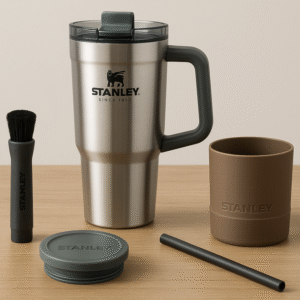
With the Stanley Quencher—popularly called the “Stanley Cup”—becoming a viral sensation on TikTok and Instagram, accessory makers are rushing to cash in. From custom handles and straw covers to silicone boots and bling toppers, the accessory market is exploding.
But before you throw your designs up on Amazon, there’s one thing you must know: you could be breaking the law without realizing it. 🛑
Selling Stanley Cup accessories on Amazon touches a hotbed of legal issues—trademark law, Amazon’s intellectual property policies, product safety regulations, and even ongoing lawsuits that could impact future branding rules.
Let’s break it all down so you can grow your business without losing your store—or worse, facing a cease and desist.
🛡️ 1. The Trademark Maze: What’s Legal, What’s Not
1.1 Who Owns the Stanley™ Brand?
The name “Stanley” in the drinkware world is a registered trademark of Pacific Market International (PMI). You can look up their active trademarks in the USPTO Trademark Database.
Using the word “Stanley” in your listing—especially in a product title or image—without permission is a violation of PMI’s intellectual property rights.
1.2 What You Can Say
It is legal to describe your product as compatible with Stanley 40 oz tumbler or fits most 40 oz tumblers if:
-
You don’t use “Stanley” in your product name or branding
-
You make it clear the product is not affiliated with Stanley or PMI
-
You use a disclaimer like: “Not endorsed by or affiliated with Stanley or PMI.”
More on this from the USPTO’s Fair Use Guidelines.
📦 2. Amazon’s Rules for Branded Accessories
2.1 Brand Registry Enforcement
PMI is registered in Amazon’s Brand Registry, which gives them the power to:
-
Remove unauthorized listings
-
Monitor keyword usage
-
Take down sellers using “Stanley” in titles, bullet points, and back-end keywords
Even mentioning Stanley in your search terms can get you flagged.
2.2 Gated or Restricted Brands
Amazon maintains a running list of Restricted Products. While Stanley might not be gated today, this can change fast if PMI pushes for broader enforcement.
📄 3. Licensing, Fair Use, and Legal Gray Areas
3.1 Getting Permission
If you want to use the Stanley name, images, or logo legally, you must license the rights directly from PMI. Their licensing contacts are available through their website: Stanley1913.com.
Without this license, using “Stanley” on your packaging, product, or Amazon listing puts you at risk for an intellectual property complaint.
3.2 What Counts as Fair Use
You can refer to a brand in nominative fair use, but only when it’s absolutely necessary and doesn’t imply endorsement. The Ninth Circuit’s test for fair use includes:
-
The product must not be easily identifiable without the mark
-
Only so much of the mark is used as necessary
-
The use does not suggest sponsorship
This is supported by rulings like New Kids on the Block v. News America Publishing.
⚙️ 4. Product Safety Laws & Testing Requirements
4.1 U.S. Consumer Safety Rules
If your product is intended for use with food or beverages (like straws or lids), it must meet safety standards established by the Consumer Product Safety Commission (CPSC) and the Food and Drug Administration (FDA).
That means:
-
FDA-approved food-contact materials
-
Certificates of compliance
-
Lab-tested, BPA-free silicone or plastic
Failure to comply can result in Amazon suspensions or U.S. customs seizures.
4.2 Amazon Safety & Documentation Policies
Amazon may ask for:
-
Product Liability Insurance (mandatory for certain categories)
-
Testing documentation for FBA listings
🌍 5. International Shipping, Tax, and Customs
5.1 Importing from Abroad
Many Stanley Cup accessory sellers use suppliers from China. If that’s you, be sure you understand:
-
U.S. Import Requirements from Customs and Border Protection
-
Labeling laws, such as “Made in China” visible on packaging
If you’re selling in Canada, refer to Health Canada’s Consumer Product Safety Guidelines.
5.2 Sales Tax Compliance
Marketplace facilitators like Amazon now collect and remit state sales taxes in most U.S. states. But if you’re importing or fulfilling yourself, talk to a tax advisor about nexus laws and VAT/GST.
🧨 6. The Lawsuit That Could Change Everything
In 2025, Stanley Black & Decker filed a trademark lawsuit against PMI, claiming PMI breached a long-standing agreement over the use of the “Stanley” name. The case has drawn attention because it could:
-
Force PMI to rebrand
-
Shift ownership of “Stanley” for drinkware
-
Further limit third-party sellers from referencing the brand
You can follow case updates through Reuters Legal News and PACER if you have access.
If Stanley Black & Decker wins, it could disrupt every seller relying on “Stanley-compatible” language—even those currently skirting the line legally.
✅ 7. Seller Best Practices
Here’s how to stay on the right side of the law—and Amazon:
| ✅ Do This | ❌ Not This |
|---|---|
| Use “fits 40 oz tumbler” | Don’t say “Stanley strap” |
| Add disclaimers | Don’t use Stanley logos or brand colors |
| Focus on compatibility | Avoid referencing trademarked designs |
| Keep lab testing docs ready | Don’t skip safety standards for silicone or plastics |
| Stay current on court rulings | Don’t assume brand enforcement will stay the same |
📚 Conclusion: Is It Worth the Risk?
Selling Stanley Cup accessories Amazon is a hot opportunity—but also legally risky if done wrong. You must balance creativity with caution. Stay away from trademarks, get your safety docs in order, and know where Amazon draws the line.
If you plan to build a long-term business, protect yourself now—don’t wait for the takedown notice or lawsuit to hit your inbox.
And remember: just because others are getting away with it, doesn’t mean you will. 🚫