

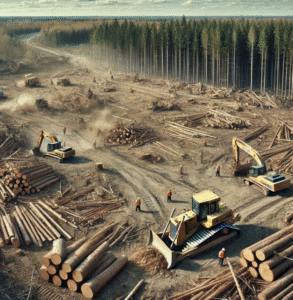
Land clearing is a fundamental step in land development, agriculture, and construction. However, it involves more than just removing vegetation; it requires navigating a complex web of federal, state, and local laws designed to protect the environment, ensure public safety, and maintain ecological balance. This article delves into the intricate legal landscape surrounding land clearing, with a particular focus on Florida, providing insights into the necessary permits, environmental considerations, and best practices.
Federal Regulations Governing Land Clearing
National Environmental Policy Act (NEPA)
The National Environmental Policy Act (NEPA) mandates that federal agencies assess the environmental effects of their proposed actions prior to making decisions. This includes projects involving land clearing, especially when federal funding or permits are involved. NEPA ensures that environmental factors are considered equally with economic and technical factors in decision-making processes. Wikipedia+1Wikipedia+1
Clean Water Act (CWA)
Under the Clean Water Act, any discharge of dredged or fill material into “waters of the United States,” including wetlands, requires a permit from the U.S. Army Corps of Engineers. Land clearing activities that involve such discharges must comply with Section 404 of the CWA to prevent significant degradation of aquatic ecosystems.
Endangered Species Act (ESA)
The Endangered Species Act prohibits activities that may harm endangered or threatened species or their habitats. Before initiating land clearing, it’s crucial to consult with the U.S. Fish and Wildlife Service to ensure that the activity does not negatively impact protected species.
Florida’s State Regulations on Land Clearing
Florida Department of Environmental Protection (FDEP)
The Florida Department of Environmental Protection (FDEP) oversees environmental management and stewardship, including regulations on land clearing. Activities that may impact wetlands or other sensitive areas require an Environmental Resource Permit (ERP) from the FDEP. floridalandclearing.com
Florida Forest Service Regulations
The Florida Forest Service regulates open burning associated with land clearing. Specific guidelines dictate when and how vegetative debris can be burned, including requirements for air curtain incinerators and restrictions in smoke-sensitive areas. Prodenv+2Florida Department of Agriculture+2Orange County, FL+2Florida Senate
Tree Protection Laws
Florida Statute Section 163.045 allows property owners to remove trees that pose a danger to persons or property without obtaining a permit, provided they have documentation from a certified arborist or licensed landscape architect. Florida Legislature
Local Regulations and Permitting Processes
Osceola County
In Osceola County, land clearing for single-family residential development requires a permit. Applicants must submit detailed plans and assume responsibility for compliance with all applicable laws. Osceola
Bay County
Bay County mandates land clearing permits for parcels over three acres, which must be issued in conjunction with a development order. For parcels under three acres, permits can be obtained from the Planning and Zoning Division. baycountyfl.gov
Martin County
Martin County requires a Land Clearing Plan to be submitted with building permit applications. Land clearing cannot commence until the building permit, including the approved Land Clearing Plan, is issued. Martin County+1baycountyfl.gov+1
Brevard County
Brevard County offers a Small-Scale Land Clearing Permit for activities that do not impact wetlands or protected species. The permit is valid for 30 days from the date of issuance. baycountyfl.gov+2Default+2Smith Trucking+2
Environmental Considerations
Wetlands and Protected Areas
Clearing land in or near wetlands requires careful planning and adherence to both federal and state regulations. Permits from the FDEP and possibly the U.S. Army Corps of Engineers are necessary to ensure that these sensitive ecosystems are protected. floridalandclearing.com
Wildlife Protection
Florida is home to numerous endangered and threatened species. Before clearing land, it’s essential to conduct wildlife assessments to ensure that habitats are not disrupted, complying with the Endangered Species Act and state regulations.ShadowCat Services, Inc.
Best Practices for Compliance
-
Conduct Preliminary Assessments: Evaluate the presence of wetlands, protected species, and other environmental factors before planning land clearing activities.
-
Obtain Necessary Permits: Secure all required federal, state, and local permits before commencing any land clearing operations.
-
Engage Professionals: Consult with environmental consultants, certified arborists, and legal experts to navigate the complex regulatory landscape.
-
Implement Erosion Control Measures: Use silt fences, sediment basins, and other best management practices to prevent soil erosion and protect water quality.
-
Maintain Documentation: Keep detailed records of all assessments, permits, and communications with regulatory agencies.American Legal Publishing+2Orange County, FL+2Default+2
Conclusion
Land clearing is a multifaceted process governed by a combination of federal, state, and local laws aimed at balancing development needs with environmental protection. Understanding and complying with these regulations is essential to avoid legal complications and contribute to sustainable land management. By conducting thorough assessments, obtaining the necessary permits, and implementing best practices, landowners and developers can ensure that their land clearing activities are both legally compliant and environmentally responsible.
Note: The information provided in this article is for general guidance only and does not constitute legal advice. For specific legal concerns, please consult with a qualified attorney or the appropriate regulatory agency.