

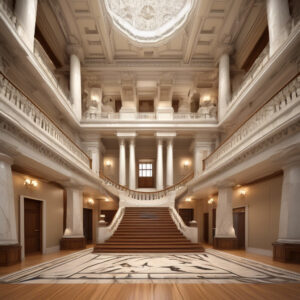
Courthouses serve as the backbone of the legal system, providing a space where justice is administered fairly and efficiently. These government buildings experience heavy foot traffic, require strict maintenance standards, and must maintain a professional appearance. Traditionally, courthouses have relied on materials such as marble, carpet, or tile for their flooring, but these options often come with high maintenance costs and durability concerns. In recent years, resinous flooring has emerged as a preferred choice for courthouses across the country.
Resinous flooring is a seamless, durable, and low-maintenance solution made from epoxy, polyurethane, or other synthetic resins. This flooring type is increasingly being used in public buildings due to its longevity, ease of cleaning, and aesthetic versatility. In this article, we will explore the reasons why courthouses are making the switch to resinous flooring, examining its benefits in terms of durability, maintenance, safety, aesthetics, and cost-effectiveness.
Durability and Longevity
One of the primary reasons courthouses are opting for resinous flooring is its durability. Courthouses are high-traffic environments, with hundreds or even thousands of people walking through them daily, including judges, lawyers, clerks, and members of the public. Unlike traditional flooring materials, which can chip, crack, or wear down over time, resinous flooring is designed to withstand heavy use without showing significant signs of wear and tear.
Resinous floors are resistant to scratches, stains, and impact damage, making them ideal for courtrooms, hallways, and common areas. Additionally, they are impervious to moisture, meaning that spills and water exposure do not cause warping or deterioration, as can happen with wood or carpet. With a properly installed and maintained resinous floor, courthouses can enjoy long-lasting performance without frequent replacements.
Low Maintenance and Easy Cleaning
Another major advantage of resinous flooring is its ease of maintenance. Courthouses require strict cleanliness standards due to their role in upholding public health and safety. Traditional flooring materials like carpet can trap dust, allergens, and bacteria, requiring constant vacuuming and deep cleaning. Meanwhile, tile floors often have grout lines that accumulate dirt and are difficult to clean.
Resinous flooring, on the other hand, is a seamless surface without grout lines or fibers to trap debris. This makes cleaning much more efficient and reduces the need for extensive labor. Courthouse janitorial teams can easily mop or sweep the floors with minimal effort, ensuring a consistently polished and professional appearance. Additionally, the non-porous nature of resinous flooring prevents the absorption of spills and stains, reducing the risk of permanent discoloration.
Enhanced Safety and Slip Resistance
Safety is a top priority in courthouses, where the risk of slips, trips, and falls must be minimized. Resinous flooring offers excellent slip resistance, especially when certain additives are included in the installation process. Textured finishes and anti-slip coatings can be applied to resinous floors to provide additional traction, reducing the likelihood of accidents.
Unlike polished marble or tile, which can become dangerously slippery when wet, resinous flooring maintains a reliable grip, even in high-moisture areas. This makes it particularly useful in entryways, lobbies, and restrooms, where wet conditions are more common. Additionally, resinous flooring complies with Occupational Safety and Health Administration (OSHA) standards for slip resistance, ensuring that courthouses meet regulatory safety requirements.
Aesthetic Appeal and Customization
While functionality is crucial, courthouses also aim to maintain a dignified and professional aesthetic. Resinous flooring is highly customizable, allowing for a variety of colors, patterns, and finishes that can complement the courthouse’s architectural style. Whether a courthouse prefers a classic, polished look or a modern, contemporary design, resinous flooring can be tailored to match its aesthetic vision.
Some resinous flooring systems even allow for the incorporation of logos, seals, or decorative patterns, enhancing the visual appeal of the courthouse environment. This customization provides a unique opportunity to reinforce the identity of the judicial institution while maintaining a clean and sophisticated appearance. Additionally, resinous flooring can mimic the look of high-end materials such as stone or terrazzo without the associated cost and maintenance challenges.
Cost-Effectiveness and Sustainability
Budget constraints are always a consideration for government-funded institutions like courthouses. Resinous flooring is a cost-effective investment due to its long lifespan and low maintenance requirements. While the initial installation cost may be comparable to other high-quality flooring options, the long-term savings make it a more economical choice.
Because resinous flooring does not require frequent replacements or intensive maintenance, courthouses can significantly reduce operational costs. Additionally, its resistance to damage minimizes the need for costly repairs, making it a practical long-term solution.
From a sustainability standpoint, many resinous flooring systems use eco-friendly materials and installation processes. Some formulations contain low volatile organic compounds (VOCs), contributing to better indoor air quality and a healthier environment for courthouse occupants. Furthermore, the longevity of resinous flooring reduces the environmental impact associated with frequent replacements and material waste.
Adaptability for Specialized Areas
Courthouses contain a variety of spaces that require different flooring needs. From public lobbies to private judge’s chambers, holding cells, and evidence rooms, each area has unique demands. Resinous flooring is highly adaptable, making it suitable for multiple courthouse applications.
Courtrooms: Aesthetic appeal combined with durability ensures a professional and long-lasting surface.
Public Hallways and Lobbies: High foot traffic requires wear-resistant flooring that can maintain its appearance over time.
Holding Cells and Secure Areas: The seamless nature of resinous flooring prevents contraband concealment and is easy to sanitize.
Clerk’s Offices and Administrative Areas: A smooth, dust-free surface provides a comfortable and clean workspace.
Restrooms and Utility Areas: Water-resistant and hygienic properties make resinous flooring an ideal choice for areas exposed to moisture.
Conclusion
Resinous flooring is quickly becoming the flooring solution of choice for courthouses due to its durability, ease of maintenance, safety features, aesthetic versatility, and cost-effectiveness. As courthouses strive to maintain a professional and functional environment, the benefits of resinous flooring make it an ideal investment for both new construction and renovation projects.
By choosing resinous flooring, courthouses can reduce long-term costs, enhance safety, and maintain a pristine appearance without the burden of intensive upkeep. As more government buildings recognize the advantages of this modern flooring solution, resinous flooring is likely to become the standard for judicial facilities across the country.