

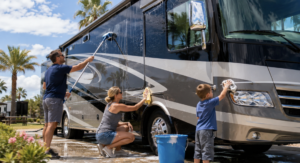
Owning a recreational vehicle comes with an unusual combination of freedom and responsibility. An RV may serve as a vehicle, temporary home, vacation property, storage space, and long-term investment all at once. That means its condition can affect far more than its appearance. Exterior neglect can contribute to corrosion, water intrusion, surface deterioration, safety concerns, warranty disagreements, environmental violations, and a lower resale value.
The phrase “Clean RV Law” is not the name of a specific federal statute. It describes a practical rule every RV owner should follow: regular cleaning is one of the simplest ways to protect an expensive vehicle from preventable damage and the legal or financial problems that may follow.
A proper RV Wash removes more than ordinary dust. It clears away road salt, insects, tree sap, bird droppings, mineral deposits, fuel residue, grime, mold, and other substances that can gradually damage exterior surfaces. When cleaning is completed responsibly and documented as part of routine maintenance, it may also help an owner demonstrate that the vehicle was properly cared for.
Routine Washing Helps Prevent Expensive Exterior Damage
An RV’s exterior is constantly exposed to changing weather and road conditions. Highway travel can cover the body, roof, windows, trim, wheels, and undercarriage with a mixture of dirt, moisture, salt, oil, and metallic particles. These materials do not simply sit harmlessly on the surface. Some hold moisture against metal components, while others react with paint, protective coatings, seals, fiberglass, and rubber.
Road salt is especially troublesome because it can accelerate corrosion when it remains on exposed metal. Even owners who avoid traveling during major winter storms may encounter salt residue left on roads for days or weeks. Coastal air can create similar concerns because airborne salt can settle on an RV parked near the ocean.
Regular washing removes these materials before they have time to cause extensive deterioration. Replacing damaged trim or restoring a faded finish may cost hundreds of dollars. Repairing serious corrosion, compromised roof seams, damaged exterior panels, or water intrusion can cost thousands.
Cleaning also gives the owner an opportunity to inspect the vehicle. A person moving carefully around the RV may notice cracked sealant, loose trim, rust near a fastener, a damaged roof component, or a small opening around a window. Finding that problem early can make the difference between a simple repair and major structural work.
Environmental Law Can Affect Where and How an RV Is Washed
Cleaning an RV is not legally identical in every location. Federal environmental law, state regulations, municipal stormwater ordinances, campground rules, and private property restrictions may all affect how wash water must be handled.
The central environmental concern is runoff. Water flowing from a dirty RV may contain soap, oil, grease, fuel residue, road salt, metals, sediment, and other contaminants. The Environmental Protection Agency’s vehicle washing guidance explains that outdoor vehicle washing can send detergent-rich water and automotive pollutants into storm drains. Many storm drains discharge into local waterways without passing through a traditional wastewater treatment facility.
The legal framework behind many water-pollution controls includes the Clean Water Act, which established a broad federal structure for regulating pollutant discharges into waters of the United States. Federal law does not mean that every person rinsing an RV at home automatically commits a federal offense. It does mean that governments have legal authority to regulate discharges, and local rules may be stricter than an owner expects.
The EPA’s National Pollutant Discharge Elimination System stormwater program addresses certain stormwater discharges from municipal systems, industrial activity, and construction sites. Local governments operating regulated storm sewer systems often adopt ordinances designed to prevent pollutants and unauthorized wash water from entering storm drains.
Responsible owners should wash on a surface where water can be collected, filtered, directed to an approved sanitary sewer connection, or absorbed by an appropriate landscaped area when local rules permit it. Washing directly beside a marked storm drain is rarely the best choice. Campgrounds, storage facilities, marinas, and homeowners associations may also prohibit vehicle washing or require the use of designated stations.
Following these rules helps protect local waterways while reducing the possibility of warnings, fines, cleanup expenses, or disputes with property managers.
Maintenance Records Can Matter During a Warranty Dispute
A recreational vehicle contains numerous components that may be covered by separate warranties. The chassis, roof, appliances, electrical system, plumbing, generator, exterior finish, sealants, windows, and installed accessories may each have different manufacturers and maintenance requirements.
Federal warranty law is largely shaped by the Magnuson-Moss Warranty Act, which appears in Title 15, Chapter 50 of the United States Code. The law governs written consumer-product warranties and establishes standards for warranty disclosures and certain consumer remedies.
A manufacturer generally cannot cancel an entire warranty merely because an owner used an independent service provider or a different brand of maintenance product. However, coverage may still be denied when the company can connect the claimed damage to improper care, misuse, neglect, or an unsuitable product. The Federal Trade Commission’s guidance on auto warranties and service contracts encourages consumers to understand the difference between a warranty and a service contract and to review the limitations attached to each form of coverage.
This is where maintenance records become valuable. An owner should retain receipts for cleaning supplies, professional detailing invoices, inspection reports, photographs, repair records, and dated notes about exterior maintenance. Photos showing the condition of the roof, seams, sidewalls, windows, and undercarriage can be particularly useful.
Documentation does not guarantee that every warranty claim will be approved. It can, however, provide evidence that the owner did not simply ignore the vehicle. When a disagreement concerns corrosion, seal deterioration, staining, water intrusion, or surface damage, a consistent maintenance history may strengthen the owner’s position.
Using the Wrong Cleaning Method Can Create Liability
Regular washing is protective only when it is performed correctly. Excessive pressure can force water behind trim, through seals, or into vents. Harsh chemicals can strip protective coatings, stain metal, cloud plastic, weaken decals, or damage fiberglass. Standing on an RV roof without following the manufacturer’s instructions may cause surface damage or personal injury.
Commercial operators also have responsibilities. A company that advertises professional RV cleaning should use appropriate products, trained workers, safe equipment, and reasonable runoff controls. When a service provider damages a roof membrane, exterior coating, solar panel, awning, seal, camera, light, or electrical component, the dispute may involve contract law, negligence principles, insurance coverage, and proof of the vehicle’s prior condition.
Owners can reduce uncertainty by photographing the RV before service begins and reviewing the company’s written terms. A reputable provider should be willing to explain its cleaning process, identify the products it uses, and describe how it handles fragile exterior materials.
The cheapest service is not always the least expensive option. A low-cost wash that damages decals, forces water behind a window, or strips a protective finish can lead to repair bills far greater than the original savings.
A Clean Exterior Can Reveal Safety Problems Before Travel
Exterior cleaning should be treated as part of a broader inspection routine. Dirt and road film can conceal cracked lights, damaged reflectors, loose hardware, worn tires, corroded connections, leaking fluids, and defects around exterior equipment.
The National Highway Traffic Safety Administration’s recall database allows owners to check a vehicle identification number for certain unrepaired safety recalls. The database also provides information about recalls involving tires and vehicle equipment.
An RV may include components produced by several manufacturers, so the chassis and the completed motorhome may not always be covered by the same recall notice. Towable RV owners may also need to check the tow vehicle, trailer, tires, hitch components, and separately installed equipment.
The federal government’s Recalls.gov safety portal brings together recall information from multiple agencies. Checking these databases during seasonal cleaning or before a major trip can help owners identify safety issues that ordinary maintenance might not resolve.
Washing will not repair a defective component, but it creates a natural opportunity to look closely at the vehicle. That inspection may reveal a problem before it causes a breakdown, collision, tire failure, property damage, or injury.
Regular Cleaning Protects Resale and Trade-In Value
RVs are expensive assets, and buyers usually judge maintenance habits within minutes of seeing one. Faded fiberglass, black streaks, oxidation, mold, stained awnings, dirty seals, rust, and neglected roof areas can make a vehicle look older than it is.
More importantly, visible neglect can lead a buyer to suspect hidden problems. A dirty roof may suggest that seams were never inspected. Heavy staining around a window may raise concerns about leaks. Corrosion underneath the vehicle may suggest prolonged exposure to salt or moisture. Even when the mechanical systems operate properly, poor exterior condition can weaken the seller’s negotiating position.
Regular washing will not eliminate depreciation, but it can preserve the condition that supports a stronger asking price. A clean vehicle is also easier to inspect honestly before a sale. Owners can identify defects, complete repairs, and make accurate disclosures rather than discovering damage after a buyer raises a complaint.
State laws governing private vehicle sales vary, but sellers should avoid concealing known defects or making false claims about condition. Good maintenance records and dated photographs can help establish what work was performed and what the owner knew at the time of the transaction.
Small Preventive Costs Can Avoid Large Repair Bills
The financial value of regular RV cleaning comes from prevention. Removing corrosive residue may protect metal components. Clearing debris from seams may make cracks easier to see. Cleaning the roof may expose damaged sealant. Washing windows and lights can improve visibility. Removing mold and organic material may prevent permanent staining.
These individual benefits may appear small, but RV damage tends to spread. A minor seal failure can allow water into a wall. Moisture can damage insulation, wood, wiring, fasteners, and interior finishes. Corrosion can weaken brackets and mounting points. Surface oxidation can become progressively harder and more expensive to correct.
A consistent cleaning schedule cannot prevent every failure. It can reduce the likelihood that ordinary grime turns into a major restoration project. It also helps an owner make informed decisions before damage becomes severe.
Conclusion
The Clean RV Law is ultimately a rule of responsible ownership. Keep the vehicle clean, inspect it carefully, control the runoff, follow the manufacturer’s maintenance instructions, document the work, and address defects while they are still manageable.
Regular washing protects more than appearance. It can reduce corrosion, reveal water-entry points, support warranty claims, improve safety inspections, preserve resale value, and help owners comply with environmental rules. Those benefits become especially important when a single overlooked leak or corrosion problem can lead to thousands of dollars in repairs.
An RV is built to travel through changing climates, road conditions, and environments. Giving it consistent exterior care is one of the most practical ways to protect that freedom while avoiding preventable legal and financial trouble.