

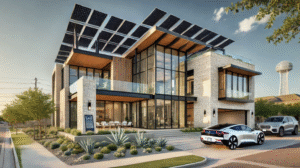
High-performance home architecture in Dallas sits at the intersection of energy law, local code, and sustainability policy. If you’re planning a net-zero ready custom build, deep-energy retrofit, or an ultra-efficient infill project inside the city limits, your design and construction choices are shaped by both Texas-level statutes and the City of Dallas’ adopted building and energy codes—plus a unique green construction overlay. This guide pulls the landscape together so owners, architects, and builders can move from concept to certificate of occupancy without legal surprises.
What “High-Performance” Means in a Legal/Code Context
“High-performance” isn’t a standalone legal label; it’s the outcome of complying with—and often exceeding—minimum prescriptive requirements in the energy code, envelope/MEP efficiency, air sealing, duct tightness, ventilation, lighting, and water-wise measures. In Dallas, those minimums are defined by the city’s adoption of the 2021 International Energy Conservation Code (IECC) with Dallas-specific amendments, plus the Dallas Green Construction Code overlay for many projects. Together, these set the floor; your high-performance target sets the ceiling. dallascityhall.com+2dallascityhall.com+2
Who Regulates What: State vs. City (and Why It Matters)
Texas sets a statewide baseline energy code, but cities can adopt stricter codes. Dallas has done exactly that by adopting the 2021 IECC (with local amendments), which is more stringent than the statewide minimums that most Texans follow. Practically, this means a high-performance home designed only to the Texas minimum won’t pass in Dallas—you must meet Dallas’ version of the 2021 IECC and any applicable green-building provisions. Texas Comptroller+2TX Energy Code+2
Dallas formalized this at the ordinance level: Chapter 59 (Dallas Energy Conservation Code) adopts the 2021 IECC and tailors it with local changes (for example, setting the Energy Rating Index and deleting certain “additional efficiency package” options for residential). Designers should treat the Dallas amendments as legally controlling. dallascityhall.com
Dallas’ Current Code Set for Homes (The Core You’ll Design To)
Dallas lists the construction codes it has adopted—each with Dallas amendments—including the 2021 International Residential Code (IRC) and 2021 IECC. For a high-performance house, the energy chapter (and the Dallas amendments) govern envelope performance, blower-door and duct leakage thresholds, ventilation, and equipment efficiency baselines. Keep that page handy when assembling your permit set and compliance reports. dallascityhall.com
Key takeaways from the Dallas Energy Conservation Code ordinance adopting the 2021 IECC:
-
The 2021 IECC is law in Dallas (via Chapter 59) for residential energy efficiency.
-
Dallas modifies several IECC provisions, including setting the Energy Rating Index (ERI) table and striking the Additional Efficiency Package Options section from the residential provisions.
These are not “nice-to-haves”—they are enforceable requirements. dallascityhall.com
Green Construction Overlay: Dallas’ Green Building Program
Dallas is recognized for passing comprehensive green-building standards that operate as an overlay—you still design to the base codes, but the green code adds extra environmental performance requirements. Importantly, green-building inspections are completed by a third-party provider before the city’s final inspection. Your provider must email an Inspection Compliance Affidavit to the city before the final building inspection; they must also retain supporting documentation for at least six months. Build this workflow into your schedule and contracts. 🌱 dallascityhall.com+2dallas.gov+2
Compliance Pathways: Prescriptive, Performance, and HERS (HB 3215)
Texas law created an additional energy-code compliance flexibility that also affects Dallas projects: House Bill 3215 (2021) recognizes the HERS Index as a standalone pathway for statewide energy code compliance. Practically, this means a Dallas project can use a RESNET HERS rating pathway—provided you still satisfy Dallas’ locally adopted code. Many high-performance teams prefer this approach because it aligns testing, modeling, and field verification around a single score that owners can understand. Texas Legislature Online+2foxenergyspecialists.com+2
Remember: Dallas’ ordinance amending the IECC includes its own ERI table and tweaks; coordinate with your HERS rater early so your projected rating fits both state-recognized compliance and Dallas-specific amendments. dallascityhall.com
Permitting, Plan Review, and Inspections (What to Expect)
For high-performance homes, the plan set should include:
-
The chosen energy compliance path (Dallas IECC prescriptive/performance or ERI/HERS).
-
Manual J/S/D or approved HVAC design documentation appropriate to your path.
-
Envelope details: continuous insulation strategies, advanced framing or thermal-bridge mitigation, fenestration U-factors/SHGC, and air-barrier continuity notes.
-
Testing commitments: blower door, duct leakage, and ventilation verification.
-
If applicable, green-code documentation and the third-party provider listed on Dallas’ roster, with a clear schedule for interim and final inspections. dallascityhall.com+2dallascityhall.com+2
Because Dallas runs formal code-amendment processes, periodically check the city’s code pages for updates (for example, recent cycles addressed items like adoption timing and effective dates). If your construction spans many months, confirm you’re still aligned with the effective codes at permit issuance and final. 🗂️ dallascityhall.com
Special Dallas Updates That Touch High-Performance Design
Two recent developments worth flagging:
-
Citywide 2021 “I-Codes” Adoption: Dallas moved to the 2021 families of codes (IRC, IBC, IECC, etc.) with local amendments, which tightened efficiency expectations for residential work relative to older cycles still common in other Texas jurisdictions. If you’re importing a plan designed to a Texas-minimum baseline, expect to upgrade the envelope and systems for Dallas. Dallas Builders Association
-
Residential Code Flexibility for Small Multifamily: In April 2025, Dallas approved a change allowing up to eight dwelling units to be constructed using residential-based codes (instead of the IBC). For high-performance townhomes or cottage courts, this can substantially affect code path, cost, and documentation—coordinate with your code consultant on whether your scheme qualifies and how that interacts with green-building and energy requirements. GovDelivery
How State Baselines Interact with Dallas’ Stricter Local Standard
Statewide, Texas historically used the 2015 IECC for many occupancies and later recognized 2018 IECC in timelines and practitioner resources; Dallas, however, explicitly adopted 2021 IECC for its jurisdiction. The lesson for project teams: cite the Dallas ordinance and the Dallas code list in your specs and compliance forms—don’t rely on a generic “Texas energy code” note, which may undershoot Dallas’ requirements. Texas Comptroller+2TX Energy Code+2
Practical Design Levers for a Dallas High-Performance Pass
Legal compliance is the floor; these moves help you clear it comfortably:
-
Envelope first: In Climate Zone 3, exceed the minimum wall/roof R-values and use high-performance windows to make blower-door results easier.
-
Air sealing continuity: Detail the primary air barrier at the plans level; include trade scopes to protect it during rough-in.
-
Ducts inside conditioning: Design for short, tight duct runs within the thermal boundary; you’ll thank yourself at duct-leakage testing.
-
Right-sized equipment: Manual J-S-D is not paperwork—it’s the backbone of comfort and efficiency.
-
Ventilation & IAQ: The 2021 IECC/IRC era assumes balanced ventilation strategies; specify equipment (and filters) early so the rater can verify.
-
HERS alignment: If you’re using the HERS/ERI pathway, coordinate your model, details, and submittals with the rater before framing to de-risk testing day. dallascityhall.com+1
Future-Proofing: Keep an Eye on Amendments and Energy Policy
Dallas periodically posts code-amendment processes (including letters, drafts, and comment windows), and the city continues to refine its code adoptions. Regionally and statewide, energy-policy conversations—from energy-efficiency incentives to renewable integration—regularly appear in Texas legislative and news cycles. Tracking these helps you anticipate where local code and enforcement may trend next. 📈 dallascityhall.com+2The Texas Tribune+2
Checklist: Legal/Code Readiness for a Dallas High-Performance Home
-
Confirm code versions on Dallas’ “Current City Code” page before design lock.
-
Choose your compliance path (prescriptive/performance vs. ERI/HERS per HB 3215) and document it clearly.
-
Engage a third-party green-building provider early; align inspections with the construction schedule.
-
Coordinate with your HERS rater on the Dallas ERI table and local amendments.
-
Embed testing milestones (blower door, ducts, ventilation) in the GC’s schedule and contracts.
-
Monitor amendments through the city’s code-process updates during long projects. dallascityhall.com+4dallascityhall.com+4dallascityhall.com+4
Conclusion: Design Ambitiously, Document Precisely, Comply Confidently
Dallas has built a robust framework—2021 IECC with Dallas amendments plus a green construction overlay—that both raises the performance floor and rewards disciplined teams that coordinate design, testing, and paperwork from day one. The legal landscape isn’t a barrier to high-performance outcomes; it’s the map. Use it well, verify early and often, and you’ll deliver a High Performance Home Dallas that’s comfortable, resilient, and verifiably efficient—and compliant when the inspector knocks. 🔍✅ dallascityhall.com+1
Authority links (law/policy context, each used once)
(For primary Dallas legal sources and official text, see the city’s 2021 IECC adoption ordinance and Dallas’ current code list, both cited inline above.) The Texas Tribune+1