

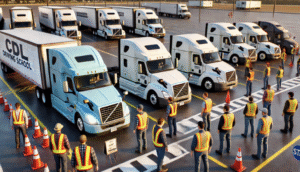
Seattle, Washington, stands as a pivotal hub in the Pacific Northwest’s transportation network. With its bustling ports, expansive roadways, and thriving logistics industry, the demand for skilled commercial drivers is ever-growing. Central to this demand is the role of Commercial Driver’s License (CDL) driving schools, which are instrumental in training the next generation of drivers. However, operating a CDL driving school in Seattle isn’t merely about providing instruction; it requires strict adherence to a complex web of federal and state regulations designed to ensure safety, competence, and professionalism in the trucking industry.
This comprehensive guide delves into the myriad laws and requirements that CDL driving schools in Seattle must navigate, offering insights for prospective school operators, instructors, and students alike.
Understanding CDL Classifications and Requirements
CDL Classifications
In Washington State, CDL licenses are categorized into three primary classes, each permitting the operation of different vehicle types:
-
Class A: Allows operation of combination vehicles with a Gross Combination Weight Rating (GCWR) of 26,001 pounds or more, provided the towed vehicle exceeds 10,000 pounds.Trucking Truth+1Washington State Department of Licensing+1
-
Class B: Permits driving single vehicles with a GVWR of 26,001 pounds or more, or towing a vehicle not exceeding 10,000 pounds.Trucking Truth+1Washington State Department of Licensing+1
-
Class C: Covers vehicles designed to transport 16 or more passengers (including the driver) or hazardous materials, provided the vehicle doesn’t meet Class A or B definitions.anewcareer.org+4Washington State Department of Licensing+4Trucking Truth+4
Each class may require specific endorsements, such as:watruckingschool.com
-
Passenger (P): For vehicles designed to carry 16 or more passengers.
-
School Bus (S): Required to operate a school bus.Americas Driving Force+12WFIS+12Washington State Department of Licensing+12
-
Hazardous Materials (H): For transporting hazardous materials.Trucking Injury Law Group+3watruckingschool.com+3Trucking Truth+3
Endorsements necessitate additional testing and background checks, especially for hazardous materials, which require Transportation Security Administration (TSA) clearance.watruckingschool.com
Eligibility Criteria
To enroll in a CDL training program in Seattle, applicants must meet the following criteria:
-
Age: Minimum of 18 years for intrastate driving; 21 years for interstate driving.Grays Harbor College
-
License: Possess a valid Washington State driver’s license.
-
Medical Certification: Obtain a Department of Transportation (DOT) medical certificate, confirming physical fitness to operate commercial vehicles.
-
Driving Record: Maintain a clean driving record, free from major violations such as DUIs or reckless driving within a specified timeframe.
-
Language Proficiency: Ability to read, write, and speak English sufficiently to converse with the general public, understand traffic signs and signals, respond to official inquiries, and make entries on reports and records.skagitcitytruckschool.com
Regulatory Framework Governing CDL Driving Schools
Federal Regulations
The Federal Motor Carrier Safety Administration (FMCSA) oversees national standards for commercial driver training. As of February 7, 2022, the Entry-Level Driver Training (ELDT) regulations mandate that:
-
Training Providers: Must be listed on the FMCSA’s Training Provider Registry (TPR).WFIS
-
Curriculum: Must adhere to standardized curricula covering theory (classroom instruction) and behind-the-wheel (BTW) training.
-
Certification: Training providers must certify that each student has successfully completed the required training before the student can take the CDL skills or knowledge test.skagitcitytruckschool.com
These regulations aim to ensure consistency and quality across all CDL training programs nationwide.
Washington State Regulations
The Washington State Department of Licensing (DOL) implements additional requirements for CDL training schools:
-
Licensing: Schools must obtain a license from the DOL to operate legally.
-
Curriculum Approval: Training programs must be reviewed and approved by the DOL to ensure compliance with state standards.
-
Instructor Qualifications: Instructors must hold a valid CDL for the class of vehicle they intend to teach and have a minimum of two years of driving experience.
-
Facility Standards: Schools must maintain facilities that meet safety and accessibility standards, including classrooms, driving ranges, and vehicles that are representative of those used in the industry.
-
Record Keeping: Accurate records of student attendance, progress, and assessments must be maintained and made available for state audits.
Curriculum and Training Requirements
Classroom Instruction
The theoretical component of CDL training encompasses a wide range of topics, including:
-
Vehicle Operation: Understanding controls, instrumentation, and vehicle systems.
-
Safety Protocols: Defensive driving techniques, hazard perception, and accident prevention.
-
Regulatory Compliance: Hours of service regulations, logbook maintenance, and understanding of federal and state laws.
-
Cargo Handling: Proper loading and unloading procedures, weight distribution, and securing cargo.ATDS Truck Driving School+6cdlaclass.com+6Driving Schools+6
-
Emergency Procedures: Responding to vehicle malfunctions, accidents, and hazardous conditions.
Behind-the-Wheel Training
Practical training involves hands-on experience in operating commercial vehicles under various conditions:Davis Law Group
-
Basic Maneuvers: Starting, stopping, turning, backing, and parking.
-
Advanced Driving: Navigating through city traffic, highways, and rural roads.
-
Pre-Trip Inspections: Conducting thorough vehicle inspections to identify potential issues.
-
Coupling and Uncoupling: Attaching and detaching trailers safely and efficiently.
-
Emergency Handling: Simulating scenarios such as brake failure, tire blowouts, and skid recovery.
The FMCSA mandates a minimum number of hours for both classroom and behind-the-wheel training, varying by CDL class.
Instructor Qualifications and Responsibilities
Instructors play a pivotal role in shaping competent and safe commercial drivers. To ensure quality instruction, the following qualifications are required:
-
Experience: A minimum of two years of experience operating commercial vehicles similar to those used in training.
-
Licensing: Possession of a valid CDL for the class and endorsements relevant to the vehicles used in instruction.
-
Background Checks: Successful completion of criminal background checks and driving record reviews.
-
Instructional Skills: Ability to effectively communicate, demonstrate, and assess student performance.
Instructors are also responsible for:
-
Curriculum Delivery: Adhering to approved curricula and adapting teaching methods to accommodate diverse learning styles.
-
Assessment: Evaluating student progress through tests, quizzes, and practical evaluations.
-
Record Maintenance: Documenting student attendance, performance, and any incidents during training.
-
Continuous Improvement: Participating in ongoing professional development to stay current with industry trends and regulatory changes.
Facility and Equipment Standards
A CDL driving school Seattle must maintain facilities and equipment that meet specific standards to provide effective training:
-
Classrooms: Adequate space, lighting, and resources to facilitate learning.
-
Driving Ranges: Designated areas for practicing maneuvers such as backing, turning, and parking.
-
Vehicles: A fleet of well-maintained vehicles representative of those used in the industry, equipped with necessary safety features.
-
Maintenance Records: Detailed logs of vehicle inspections, repairs, and maintenance activities.
-
Safety Measures: Implementation of safety protocols, emergency procedures, and first aid availability.
Regular inspections by the DOL ensure compliance with these standards, and deficiencies must be addressed promptly to maintain licensure.Trucking Injury Law Group
Student Assessment and Certification
Upon completion of the training program, students must undergo evaluations to demonstrate their readiness for commercial driving:
-
Knowledge Test: A written examination covering theoretical aspects of commercial driving.
-
Skills Test: A practical assessment evaluating vehicle inspection, basic control skills, and on-road driving performance.Washington State Department of Licensing
Successful candidates receive a certificate of completion, which is a prerequisite for scheduling the official CDL skills test administered by the DOL.
Schools are responsible for reporting student outcomes to the DOL and maintaining records for a specified period, typically three years.