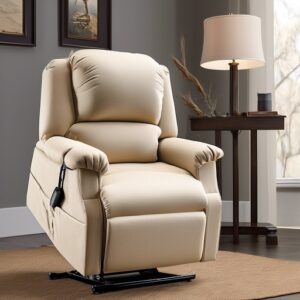
Lift chairs, also known as power recliners or motorized recliners, have become an essential device for individuals with mobility challenges. These chairs are designed to help users transition smoothly between sitting and standing, making daily activities easier for seniors, people with disabilities, and those recovering from surgery. While the primary focus of lift chairs is comfort and independence, it’s important to understand the various laws and regulations surrounding their use, manufacturing, and distribution.
The regulation of lift chairs involves several key aspects, including medical device classification, insurance coverage, consumer protection laws, and product safety standards. These legal frameworks ensure that lift chairs are not only safe and effective but also accessible to the people who need them the most. This article explores these laws in depth, offering valuable insight into what consumers, manufacturers, and healthcare providers should know.
Medical Device Classification and FDA Regulation
FDA Classification
In the United States, lift chairs are classified as “durable medical equipment” (DME) and are regulated by the Food and Drug Administration (FDA). Specifically, the mechanism that lifts the chair into a standing position is considered a medical device, subject to FDA regulations. The FDA classifies medical devices into three categories based on their level of risk:
Class I: Devices with the lowest risk, subject to general controls (e.g., adhesive bandages).
Class II: Devices with moderate risk, subject to additional regulations and special controls (e.g., powered wheelchairs).
Class III: Devices with the highest risk, requiring premarket approval (e.g., pacemakers).
Lift chairs typically fall under Class II because they have a powered lifting mechanism, which is considered moderately risky if malfunctioning could potentially harm the user. Manufacturers must ensure that the device meets FDA standards for safety and effectiveness. They are also required to maintain records and report any adverse events related to the lift chair’s use.
FDA Approval and Compliance
Manufacturers of lift chairs are required to comply with the FDA’s Good Manufacturing Practices (GMP), ensuring that all products are produced consistently and meet quality standards. Additionally, lift chair manufacturers must register their devices with the FDA and obtain premarket clearance under the 510(k) process. This clearance verifies that the new device is substantially equivalent to another legally marketed device.
Failure to comply with FDA regulations can result in fines, recalls, or even a ban on selling the product.
Medicare and Insurance Coverage
Medicare Part B
In the United States, Medicare covers a portion of the cost of lift chairs under Medicare Part B, which provides coverage for durable medical equipment. However, there are specific conditions that must be met for a lift chair to qualify for Medicare coverage:
The lift chair must be deemed “medically necessary” by a physician. This means that the user must have a condition that makes it difficult to stand up without assistance, such as arthritis or severe mobility issues.
Only the lifting mechanism of the chair is covered by Medicare, not the entire chair. This typically translates to Medicare covering about 80% of the cost of the lifting mechanism after the patient meets their annual deductible, while the remaining cost (usually for the chair itself) is the patient’s responsibility.
To qualify for Medicare coverage, the chair must also be purchased from a Medicare-enrolled supplier. The supplier will bill Medicare directly for the covered portion, and patients will pay their portion out-of-pocket or through supplemental insurance.
Private Insurance
Private insurance companies may also cover lift chairs, though coverage varies significantly depending on the insurer and the specific policy. Some insurance companies follow Medicare’s lead, covering only the lift mechanism, while others may provide more comprehensive coverage.
Patients should contact their insurance provider before purchasing a lift chair to understand the extent of coverage, any pre-approval requirements, and whether a prescription from a healthcare provider is necessary.
Medicaid and State Programs
Medicaid, a state and federal program that assists with medical costs for low-income individuals, may also cover the cost of a lift chair, though eligibility and coverage vary by state. Some states have programs specifically designed to assist individuals with disabilities in acquiring durable medical equipment.
In addition to Medicaid, various state and nonprofit programs may provide financial assistance for the purchase of lift chairs. For example, programs aimed at veterans, seniors, or people with disabilities often offer resources to help cover the costs.
Consumer Protection Laws
Warranty and Return Policies
Lift chairs, like all consumer products, are subject to federal and state consumer protection laws. These laws are designed to protect consumers from defective products, misleading advertising, and unfair business practices. Most manufacturers offer warranties on lift chairs, typically covering defects in materials and workmanship for a specified period. These warranties often range from one to five years, depending on the manufacturer and model.
The Magnuson-Moss Warranty Act is a federal law that governs warranties on consumer products, including lift chairs. Under this law, warranties must be clearly written and easy to understand. If a lift chair comes with a written warranty, it must comply with the Magnuson-Moss Act, meaning that the warranty terms are enforceable by law. Consumers are also entitled to a refund or replacement if the chair is defective and the manufacturer fails to repair it within a reasonable timeframe.
Fair Credit Billing Act
Consumers who purchase lift chairs using a credit card are protected under the Fair Credit Billing Act (FCBA). This law allows consumers to dispute charges if they receive a defective product, are billed incorrectly, or do not receive the product they paid for. In cases where a consumer feels they were wrongfully charged for a lift chair, they can dispute the charge with their credit card company, potentially recovering the cost.
Safety Standards and Accessibility Laws
1. Consumer Product Safety Commission (CPSC) Regulations
The Consumer Product Safety Commission (CPSC) sets safety standards for many consumer products, including lift chairs. The CPSC ensures that lift chairs meet certain criteria to minimize the risk of injury. For example, chairs must have reliable safety mechanisms to prevent malfunction during the lifting process, and the motors and electronics must comply with safety codes to avoid electrical hazards.
In addition, manufacturers must comply with the Federal Hazardous Substances Act (FHSA), which regulates the use of toxic materials and chemicals in consumer products. This law helps ensure that lift chairs do not pose any health risks due to the materials used in their construction.
Americans with Disabilities Act (ADA)
While the Americans with Disabilities Act (ADA) is primarily focused on public spaces and accessibility, it has implications for lift chairs in certain environments. For example, healthcare facilities, assisted living centers, and other public or semi-public establishments are required to provide accommodations for individuals with disabilities. This may include providing access to lift chairs or other mobility aids to ensure that individuals can participate fully in daily activities.
Although the ADA does not require individuals to purchase lift chairs for personal use, it does promote accessibility and equal opportunity in public and commercial settings.
Liability and Legal Recourse
Product Liability Laws
In cases where a lift chair malfunctions and causes injury, product liability laws come into play. These laws allow consumers to sue manufacturers, distributors, or retailers for damages resulting from defective products. There are three main types of product liability claims:
Design Defects: If the design of the lift chair is inherently unsafe or does not function as intended, the manufacturer could be held liable for any injuries that occur as a result.
Manufacturing Defects: If a lift chair was made improperly (e.g., a faulty motor or wiring), the manufacturer could be held responsible for injuries caused by the defect.
Marketing Defects: If the manufacturer fails to provide adequate instructions or warnings about the proper use of the lift chair, they could be held liable if this leads to injury.
Consumers who are injured by a lift chair should consult a personal injury attorney to explore their legal options.
Negligence and Duty of Care
Retailers and healthcare providers who recommend or sell lift chairs also have a legal duty of care to ensure that the products they offer are safe and appropriate for the consumer. If a healthcare provider fails to assess a patient’s needs properly or recommends a lift chair that is not suited for their condition, they could be held liable for negligence.
Conclusion
The laws surrounding lift chairs are designed to protect consumers, ensure product safety, and promote accessibility for individuals with mobility challenges. From FDA regulations and Medicare coverage to consumer protection laws and product liability claims, understanding the legal landscape is crucial for anyone purchasing or using a lift chair.
For consumers, knowing your rights under warranty, insurance policies, and consumer protection laws can help you make informed decisions and ensure that you receive the best possible product and service. For manufacturers and retailers, compliance with safety standards, FDA regulations, and liability laws is essential to avoid legal issues and maintain customer trust.
By staying informed about these laws and regulations, both consumers and providers can navigate the world of lift chairs with confidence and peace of mind.